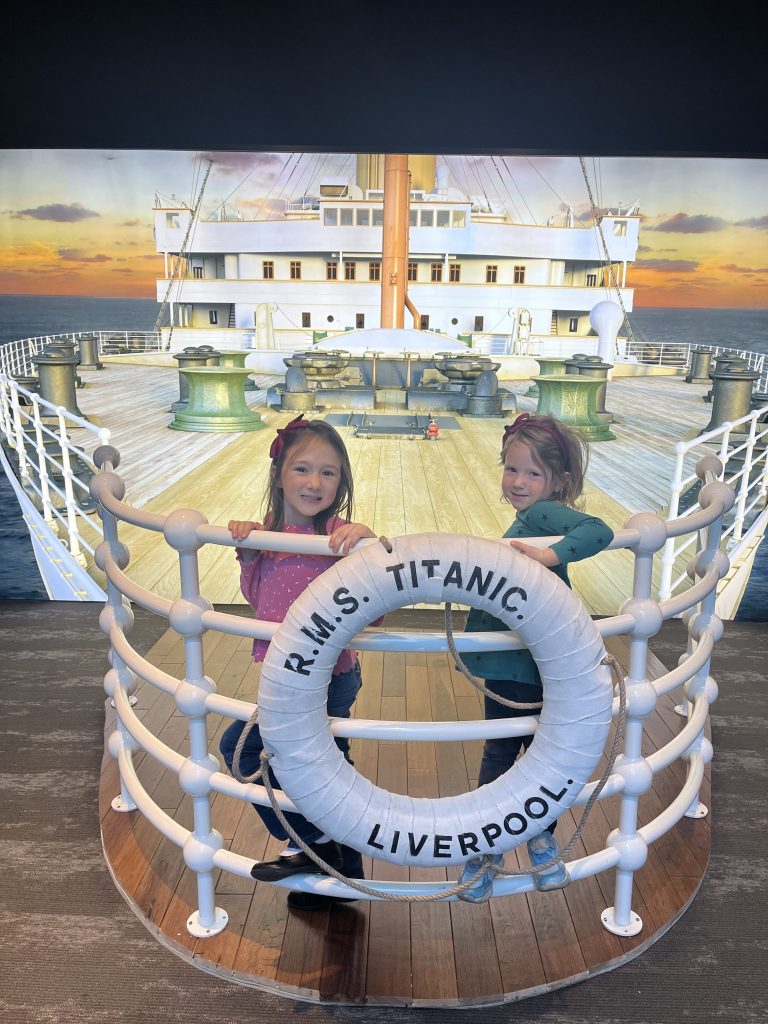
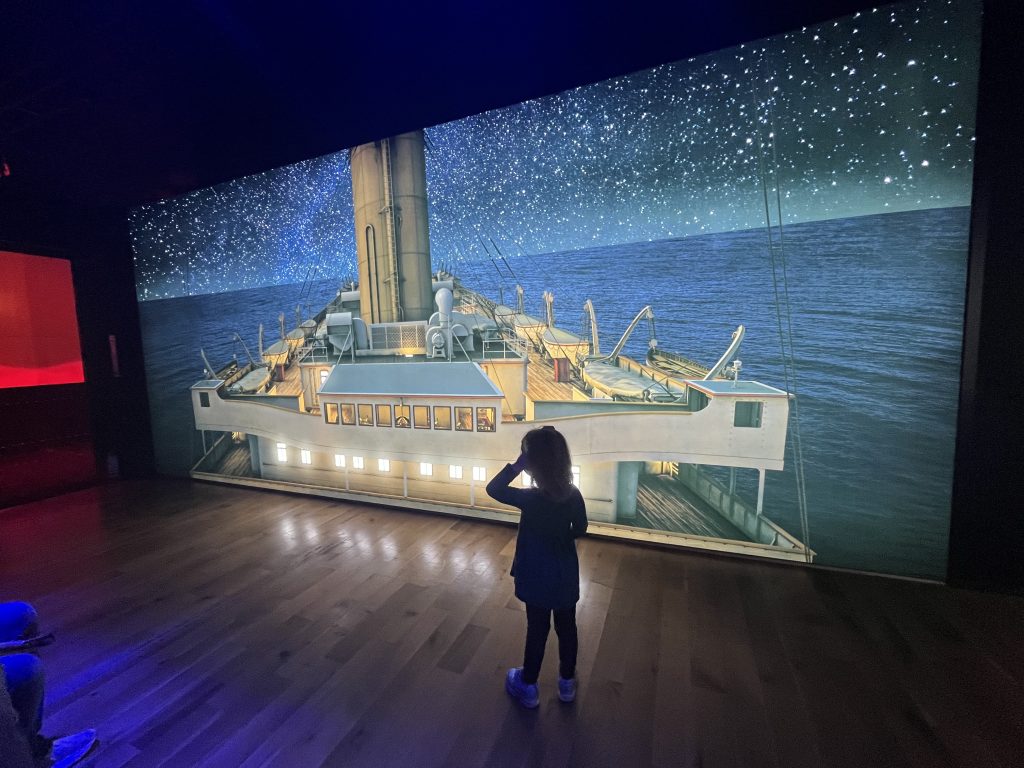
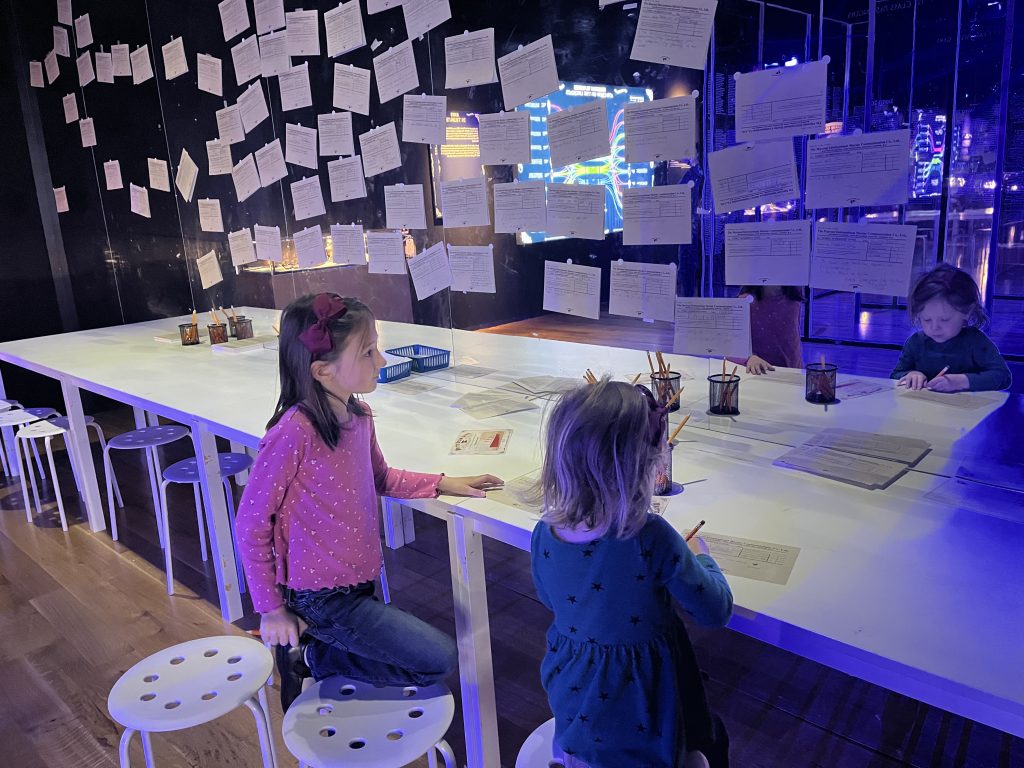
From the moment we heard the ocean breeze, the rolling waves and the cheerful ring of ship bells, my family felt as though we had boarded the Titanic for a voyage back in time. The exhibit was inviting, educational and reflective as it brought the ship and its passengers to life through 200 authentic artifacts, recreated rooms and multimedia.
Union Station’s newest exhibit, Titanic: An Immersive Voyage, opened on Nov. 8 and made its U.S. debut right here in Kansas City. It will remain open until April 19, 2026.
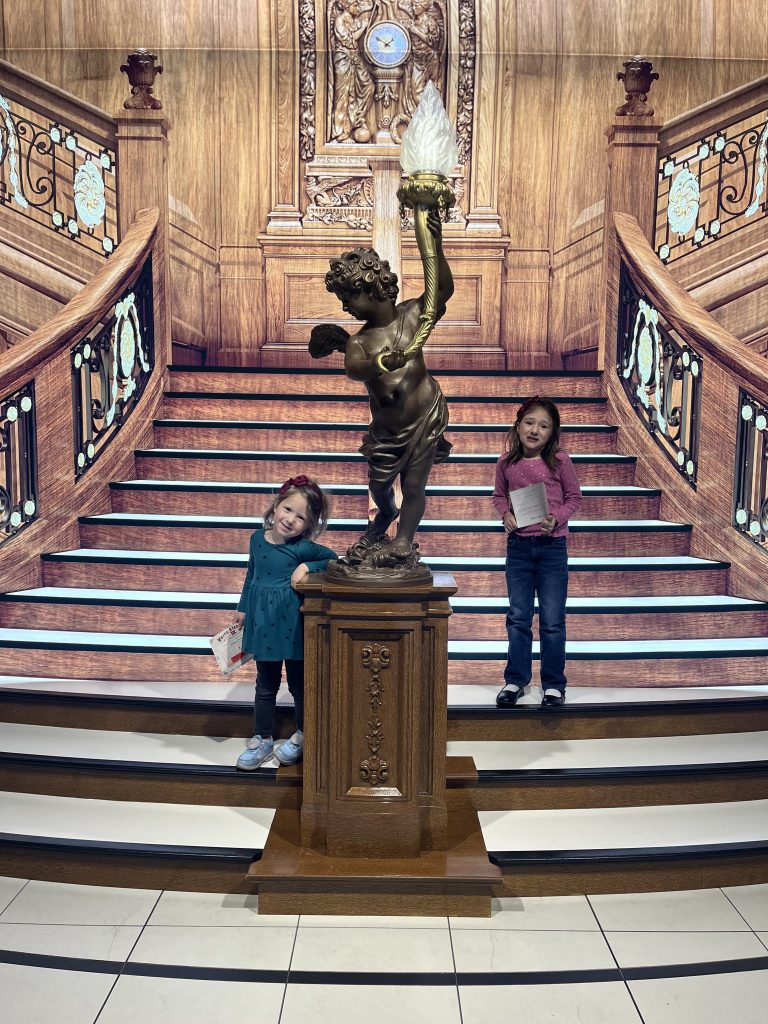
In this self-guided exhibit, visitors can get an up-close look at the construction of the ship, explore a reconstructed boiler room and tour the opulent cabins, dining room and grand staircase. We watched from the bow as the ship collided with the infamous iceberg and, most notably, climbed inside a recreated lifeboat to relive the ship’s heartbreaking final moments in an immersive and emotional sequence.
Not only did we learn about the Titanic itself, but also about the passengers, surrounding boats and the history and path of the iceberg. We were each given a card with a passenger’s name, background and boarding class as we toured the exhibit and told we would discover their fate at the touch-screen station at the end. It was no surprise that all of our passengers died in the sinking of the ship, as it is estimated that more than 1,500 people were lost that night. We were especially moved by the heroism of the passenger on my daughter’s card, who had secured a spot on a lifeboat but willingly gave up her seat to a mother with a young child, ensuring her own death.
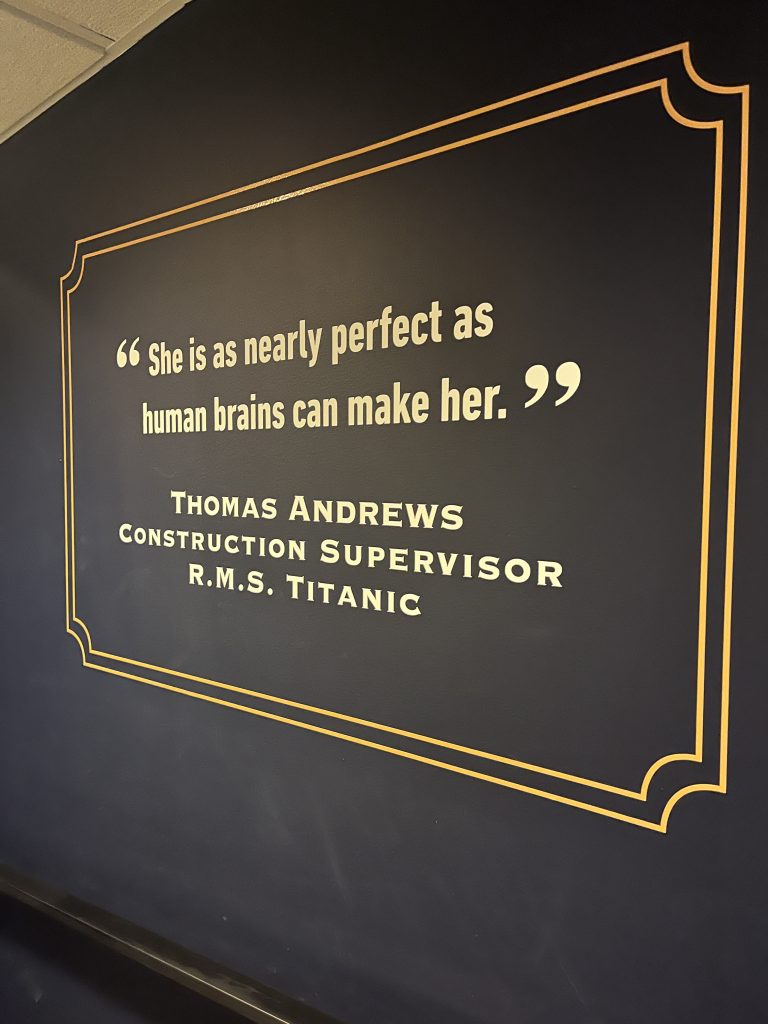
While Rose and Jack may be the most well-known passengers from the 1997 movie, albeit fictitious characters, they represent the larger 2,200 lives aboard the RMS Titanic that fateful night on April 15, 1912. Due to advances in technology and her grand interior, the ship was named The Queen of the Seas and construction supervisor Thomas Andrews famously said, “She is as nearly perfect as human brains can make her.” The chilling quote appears on one of the final museum-style panels.
We learned of the bravery of the captain of the Carpathia, one of the few surrounding ships that heard and answered the Titanic’s messages for help. He navigated treacherous icy conditions to rescue survivors waiting in lifeboats. The exhibit also traces the history and path of the iceberg that collided with the ship, displayed on a large projection map that follows its journey from formation to dissolution only days later.
For me, the most emotional moment came at the end of the exhibit, where a large mirrored wall displayed hundreds of old-time boarding passes. Guests were invited to share their impressions. Both of my daughters expressed their sympathies and added their cards to the wall.
Expect the tour to take about an hour to complete. The content can be sensitive at times, especially surrounding the sinking of the ship. While there is plenty of reading available for those who like to take their time, my daughters remained engaged through the sound design, projection mapping, touch screens and authentic replicas.
As we stepped out of the final gallery, the echoes of ocean wind and whispered stories stayed with us. Titanic: An Immersive Voyage is more than a history lesson. It’s a moving reminder of the real lives behind one of the world’s most storied tragedies. For families looking to learn, reflect and experience the past in a meaningful way, this exhibit is well worth the voyage.